Quick Links
KelpDAO Exploit Wipes $14B from DeFi TVL — Leverage Traders Face Liquidation Risk as Aave Hits 100% Utilization
Data Snapshot
Key Takeaways
- •The KelpDAO LayerZero bridge exploit (~$294M) caused DeFi TVL to drop ~14%, from ~$99B to ~$85B–$86B in ~48 hours.
- •Aave froze rsETH/WETH markets and hit 100% stablecoin utilization — a liquidity stress signal that directly increases funding costs for leveraged DeFi positions.
- •Leverage risk is elevated: ETH longs above 20x leverage are vulnerable to collateral-unwind selling; reduce size or tighten stops until Aave bad-debt resolution (~$123M–$230M range) is confirmed.
- •AAVE and UNI tokens face dual headwinds — protocol risk repricing and governance overhang; crypto-proxy equities COIN and MSTR carry secondary sentiment risk.
- •DeFi TVL holding above $85B is the near-term stabilization indicator to watch before re-entering leveraged long positions on DeFi-native assets.
A ~$292M–$294M exploit targeting Kelp DAO's rsETH liquid restaking token triggered one of DeFi's largest single-incident liquidity drains in recent memory. According to Galaxy Research, attackers forg
Event Summary
A ~$292M–$294M exploit targeting Kelp DAO's rsETH liquid restaking token triggered one of DeFi's largest single-incident liquidity drains in recent memory. According to Galaxy Research, attackers forged a cross-chain message via a LayerZero/OFT bridge vulnerability, breaking the rsETH peg and compromising collateral quality across at least nine lending markets. As reported by CryptoBriefing and Phemex, DeFi's total value locked collapsed from ~$99B to ~$85B–$86B within roughly 48 hours — a ~14% drawdown.
Aave bore the brunt: outflows ranged from $6.6B to $8.45B depending on the source. Galaxy Research further flagged that Aave froze rsETH, wrsETH, and WETH markets, while stablecoin pools hit 100% utilization — a textbook signal of stressed withdrawable liquidity. Potential bad debt on Aave is estimated at $123.7M under a socialized-loss scenario, or up to $230.1M under an isolated L2 scenario, per Galaxy.
This event fits squarely within the DeFi Structural Reset pattern — one bridge failure cascading into a multi-protocol bank run dynamic.
Leverage Impact Analysis
For leveraged traders, the critical risk is cascading liquidations driven by collateral devaluation. When rsETH's peg broke, any borrower who posted it as collateral saw their loan-to-value ratios spike instantly — forcing liquidations or forced repayments across protocols.
Worked example — ETH long: A trader running a 50x long ETH perpetual on CoinUnited.io at $3,200 entry requires only a ~2% adverse move to hit liquidation. The rsETH depeg drove forced selling of WETH collateral across Aave, creating direct downward price pressure on ETH. Even a 3–5% ETH drawdown from collateral unwinds would liquidate positions with >20x leverage opened near recent highs.
Funding rate stress: With Aave stablecoin markets at 100% utilization, borrowing costs for stablecoin-denominated positions spike. Traders holding leveraged DeFi token longs (AAVE, UNI) should monitor funding rates closely — elevated rates erode P&L on positions held through the volatility window. Check current funding rates on CoinUnited.io before sizing DeFi-token exposure.
Position sizing note: Given estimated bad debt of up to $230M still unresolved, secondary liquidation waves remain possible. Reducing position size or tightening stops on DeFi-exposed assets is warranted until Aave's governance publishes a final bad-debt resolution plan. Our guide on DeFi protocol exploits and bad debt resolution covers the typical recovery timeline in detail.
Cross-Market Impact
ETH & ETH-beta: The exploit is ETH-ecosystem-native — rsETH, wrsETH, and WETH were all frozen. Ethereum faces direct sell pressure from collateral unwinds. ETH-leveraged longs carry elevated liquidation risk until TVL stabilizes.
DeFi tokens (AAVE, UNI): Aave is the epicenter of outflows; its token faces both protocol-risk repricing and governance overhang from bad-debt resolution. Uniswap faces secondary sentiment contagion as DeFi risk appetite retreats broadly.
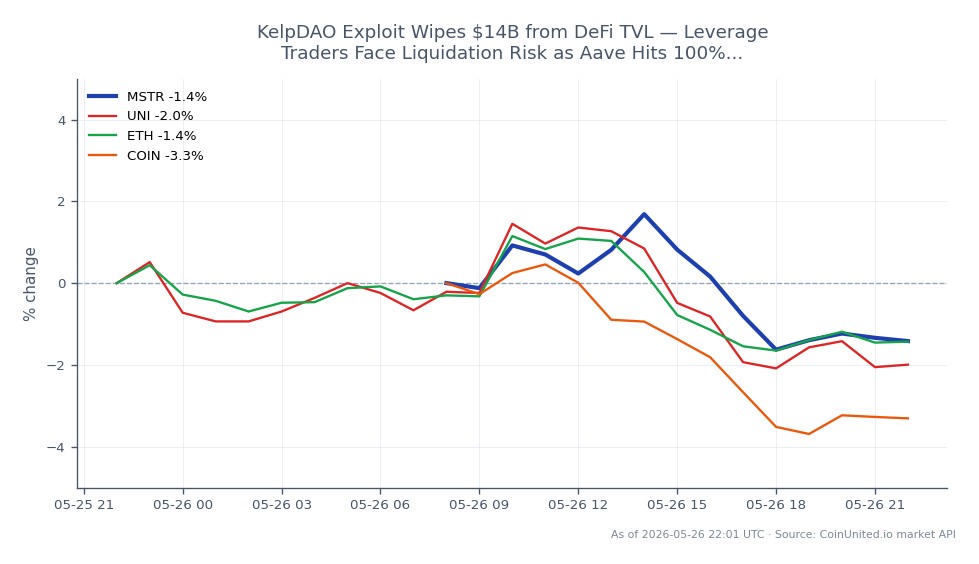
BTC & crypto-proxy equities: Bitcoin typically shows limited direct exposure to DeFi exploits but can suffer sentiment-driven correlation selling. Crypto-proxy stocks — particularly Coinbase (COIN) and MicroStrategy (MSTR) — may see CFD pressure if broader crypto risk-off accelerates. The DeFi bridge exploit contagion theme historically suppresses exchange volumes, which weighs on COIN revenue expectations.
Stablecoins: USDC liquidity conditions tighten when Aave stablecoin pools hit 100% utilization — relevant for traders using USDC as collateral or for yield strategies.
Trading Considerations
Key levels to watch: DeFi TVL holding above $85B matters — a break lower would signal continued protocol withdrawals rather than a stabilization bounce. For ETH, the $3,000 psychological level serves as near-term support; a close below would confirm risk-off momentum and increase liquidation pressure on 20x+ longs.
Monitor Aave's governance forum for bad-debt resolution announcements — the $123.7M–$230.1M range represents unresolved systemic risk. Open interest across DeFi-token perpetuals should be watched for confirmation that forced selling has subsided before re-entering long positions. The broader DeFi reset risks context suggests protocol insurance and risk parameter upgrades will be the key narrative catalysts for recovery.
Start Trading on CoinUnited.io
Create Your Free Account → — Trade crypto, stocks, forex, indices, and commodities with up to 2000x leverage and zero fees.
Frequently Asked Questions
The rsETH depeg forced WETH collateral liquidations across at least nine lending markets, creating direct downward price pressure on ETH. Any leveraged ETH long above 20x opened near recent highs faces liquidation on a 2–5% drawdown — monitor ETH's $3,000 support level closely.
Continue Exploring
Disclaimer: This brief is for educational purposes only and is not investment advice.