Quick Links
Nuvei-Payoneer $2.3B Merger Talks: Leverage Scenarios, Arb Setup & Fintech Sector Repricing
Key Takeaways
- •PAYO jumped on the $2.3B acquisition report — leveraged long CFD positions are profitable short-term but face severe deal-break liquidation risk if talks collapse.
- •NVEI faces typical acquirer pressure (overpayment/dilution concerns); a 30x short NVEI CFD captures this dynamic but risks squeeze on positive synergy news.
- •Cross-market impact is sector-specific: PayPal, Block, and FIS may see sympathy re-rating as M&A activity raises valuation floors for smaller fintech names.
- •No definitive agreement is signed — treat this as a binary event; the merger-arb spread reflects deal completion probability and should guide position sizing.
- •The deal reinforces the fintech consolidation narrative, supporting the thesis that beaten-down payment platforms carry strategic M&A value above public market multiples.
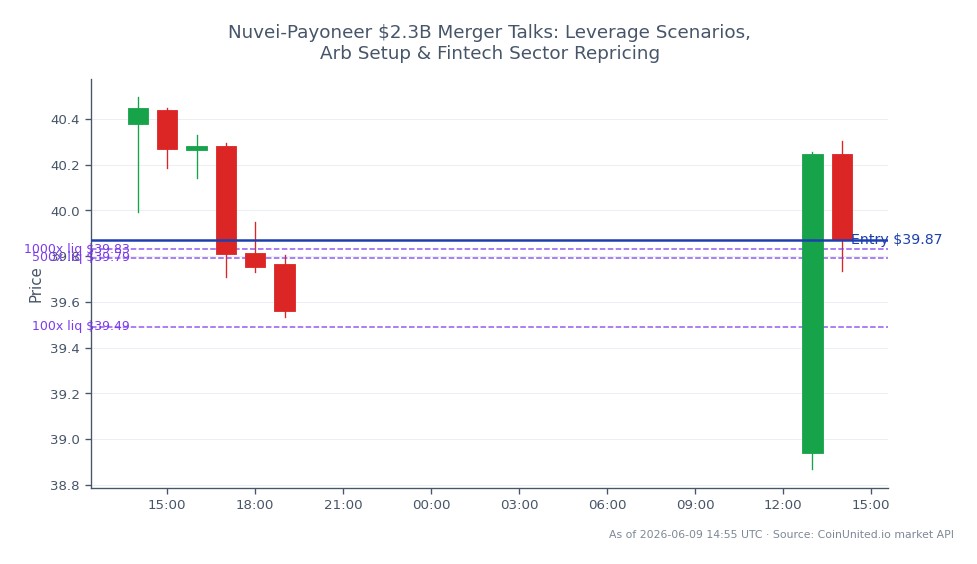
Payoneer Global Inc. (PAYO) surged on reports that Canadian payments processor Nuvei Corp. (NVEI) is in talks to acquire it for approximately $2.3 billion, according to financial media coverage. The d
Event Summary
Payoneer Global Inc. (PAYO) surged on reports that Canadian payments processor Nuvei Corp. (NVEI) is in talks to acquire it for approximately $2.3 billion, according to financial media coverage. The deal — if completed — would combine Nuvei's payment processing infrastructure with Payoneer's cross-border B2B payments platform, which serves SMBs and digital businesses globally.
This remains unconfirmed as a binding agreement. No definitive merger agreement, 8-K filing, or official press release has been disclosed. Traders should treat this as a confirmed media report of ongoing negotiations — talks can still collapse, be renegotiated, or attract competing bids.
Leverage Impact Analysis
For CFD traders on CoinUnited.io, this event creates asymmetric leverage dynamics across both stocks.
PAYO (Target) — Long bias with deal-spread risk: Assume PAYO traded near $5.50 pre-news and spiked toward $7.00+ on the report, implying a market-perceived deal price around the $2.3B equity value. A trader holding a 50x long PAYO CFD entered at $5.50 would see ~27% mark-to-market gain on a $7.00 price — representing a ~1,350% return on margin at 50x. However, the deal-break risk is the critical threat: if talks collapse, PAYO could revert sharply toward pre-rumor levels, wiping out leveraged longs in a single session.
The acquisition arbitrage setup here is: the spread between current PAYO price and implied offer price reflects the market's probability of deal completion. A wide spread = low confidence. High-leverage positions must account for this binary risk.
NVEI (Acquirer) — Short pressure common in M&A: Acquirer stocks typically face initial selling pressure on overpayment and leverage/dilution concerns. A 30x short NVEI CFD would benefit from any immediate post-announcement decline, but faces squeeze risk if synergy rationale is well-received or a strategic counter-bid emerges.
Position sizing discipline is essential: the M&A acquisition wave environment means deal-break volatility can be extreme. Keep leverage on both names below comfortable liquidation thresholds and monitor for official company statements that can gap prices instantly.
Cross-Market Impact
This is primarily a micro/sector event with limited macro spillover, but meaningful for the broader fintech acquisition repricing theme:
- -PayPal (PYPL) and Block (SQ): Peer payments names may see modest sympathy lifts as M&A activity raises sector floor valuations and re-energizes consolidation narratives. Traders long PayPal should watch for re-rating flows.
- -FIS (Fidelity National Information Services): Larger processors with underperforming multiples could attract renewed M&A speculation given the consolidation narrative.
- -Fintech ETFs: Funds holding both PAYO and NVEI may see rebalancing flows, particularly if index weights shift post-deal announcement.
- -Crypto/FX: No material direct impact. Both companies touch cross-border payments and digital business flows, but the deal size is too small to move macro FX or crypto markets.
The cross-sector acquisition repricing theme supports a view that smaller, profitable fintech niches are being valued at strategic premiums above public market multiples.
Trading Considerations
Key risk factors: (1) No definitive agreement exists — any denial from either company triggers sharp downside for PAYO. (2) The consideration mix (cash vs. stock) is unknown — a stock-heavy deal adds dilution risk to NVEI. (3) Regulatory approvals (antitrust, payments licensing) could extend timeline or block the deal entirely, particularly given cross-border complexity.
Watch for: official 8-K filings, board statements, and any competing bid announcements. These are the next tradable catalysts in the M&A wave trading cycle.
Start Trading on CoinUnited.io
Create Your Free Account → — Trade crypto, stocks, forex, indices, and commodities with up to 2000x leverage and zero fees.
Frequently Asked Questions
If talks collapse, PAYO could gap back toward pre-rumor levels in a single session, liquidating high-leverage longs instantly. Keep position sizing modest and set stop-losses above your liquidation price.
Continue Exploring
Disclaimer: This brief is for educational purposes only and is not investment advice.