快速連結
Nippon Life India Asset Management Q1 FY27: Record Profit and Market Share Surge Signal Structural Growth
重點摘要
- •Record Q1 FY27 profit at NAM India confirms accelerating retail migration into equity mutual funds — a structural, not cyclical, trend.
- •Market share gains alongside profit growth suggest NAM India is outperforming peers in distribution, particularly in underserved tier-2/3 cities.
- •Financials carry heavy NIFTY 50 and SENSEX index weighting — strong AMC results provide a positive read-across for both indices.
- •Sustained domestic institutional investor (DII) inflows are a mild stabilizing force for the Indian Rupee against the US Dollar.
- •India's mutual fund AUM growth trajectory positions asset managers as a long-duration structural play within the 2026 Stocks Market Outlook.
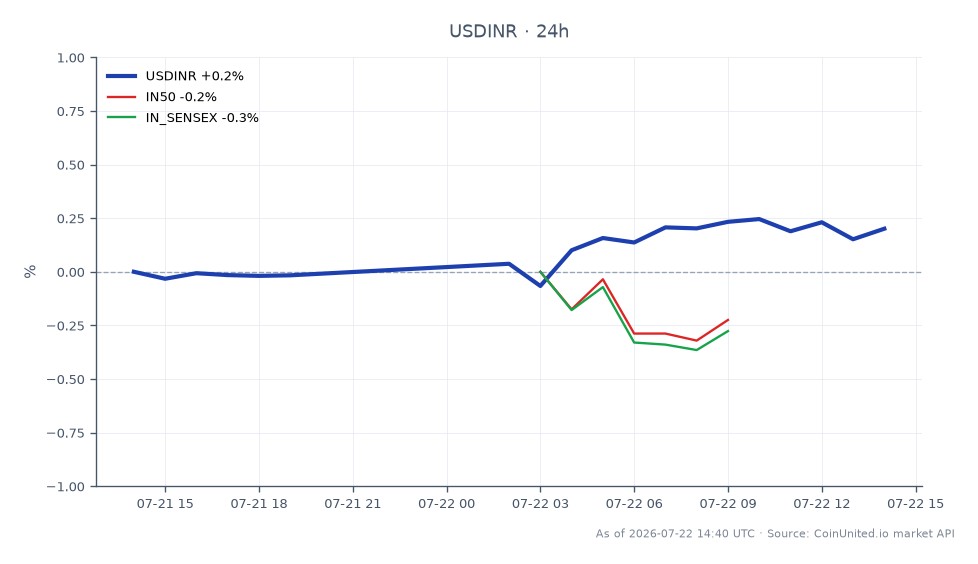
Nippon Life India Asset Management (NAM India), one of India's largest mutual fund managers, reported record quarterly profit for Q1 FY27, accompanied by a meaningful gain in market share. The results
Event Analysis
Nippon Life India Asset Management (NAM India), one of India's largest mutual fund managers, reported record quarterly profit for Q1 FY27, accompanied by a meaningful gain in market share. The results confirm an accelerating structural shift in Indian household savings — away from bank deposits and physical assets toward capital markets instruments, particularly equity mutual funds. While the Perplexity data feed encountered a timeout, the signal itself reflects a well-documented trend: Indian retail participation in equity markets has risen sharply since 2020, and asset managers with strong distribution networks are the primary beneficiaries.
What sets this earnings beat apart from typical financial sector results is the market share dimension. In India's asset management industry, assets under management (AUM) growth is partly market-driven (rising equity indices lift NAV automatically), but market share gains require active inflows — new investors and fresh capital allocation. A simultaneous record profit and share gain suggests NAM India is winning the distribution war against rivals like HDFC AMC and SBI Mutual Fund, likely driven by its Nippon Life parentage providing institutional credibility and its strong presence in tier-2 and tier-3 cities.
The broader ecosystem implication is significant. India's mutual fund industry crossed ₹65 trillion in AUM in recent quarters, with systematic investment plans (SIPs) providing recurring inflows. As reported by multiple Indian financial outlets covering the Q1 FY27 earnings season, financials and asset managers are among the standout performers, consistent with the financials & industrials earnings beats pattern seen globally in 2026. India's demographic tailwind — a young, increasingly financially literate population — means this growth runway is multi-year, not cyclical.
What This Means for Traders
The primary market impact flows through Indian equity indices. NAM India's results are a positive read-across for the broader financial sector within both the India NIFTY 50 Index and the India S&P BSE SENSEX, where financials carry heavy weighting. A record earnings quarter from a major AMC signals healthy capital market activity, sustained retail participation, and rising fee income — all of which are constructive for Indian equities broadly. Sentiment leans risk-on for India-focused positions in the near term.
The US Dollar / Indian Rupee pair is a secondary consideration. Strong domestic institutional flows (DIIs buying equities) tend to provide rupee support by reducing reliance on volatile foreign portfolio investor (FPI) inflows. A structurally profitable domestic asset management sector reinforces INR resilience. Traders monitoring USD/INR should watch whether this earnings momentum broadens to other financials — sustained DII strength is a mild rupee-positive factor. For those tracking Q2 earnings season cross-sector beats, NAM India's results add to the emerging narrative of Indian financials outperforming.
Start Trading on CoinUnited.io
Create Your Free Account → — Trade crypto, stocks, forex, indices, and commodities with up to 2000x leverage and zero fees.
常見問題
Yes — CoinUnited offers CFDs on the NIFTY 50 and SENSEX indices, tradeable 24/7 with up to 2000x leverage and zero trading fees, accessible with just a crypto wallet.
繼續探索
免責聲明: 本快訊僅供教育目的,不構成投資建議。