त्वरित लिंक
AscendEX Collapse: Withdrawal Freeze and Liquidity Shortfall Signal Centralized Exchange Risk
मुख्य निष्कर्ष
- •AscendEX halted all trading and deposits on July 1, 2026, and moved withdrawals to manual review on July 6, with ZachXBT reporting hot wallet balances insufficient to cover user claims in the millions.
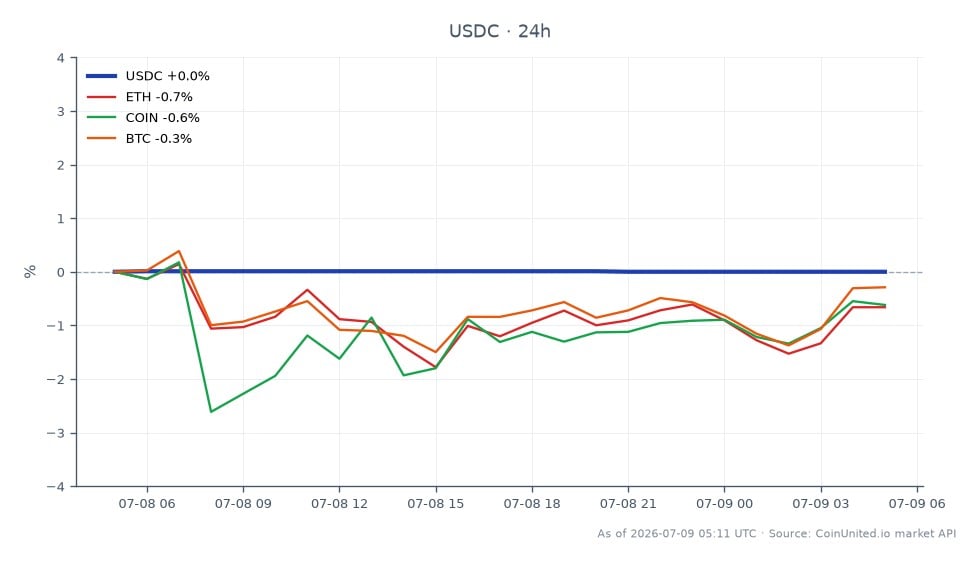
- •Leverage risk is elevated: exchange-fear events historically produce 3-5% rapid BTC/ETH drawdowns, enough to liquidate 20x-33x long positions — reduce position sizing during the uncertainty window.
- •USDC and stablecoin inflows may temporarily increase as traders exit centralized venues and seek safer off-exchange custody.
- •Coinbase (COIN) CFDs may see sentiment-driven selling, but Coinbase's fundamentally different regulatory and solvency profile limits direct fundamental contagion.
- •EU MiCA compliance is cited as a contributing factor, reinforcing the broader theme that European regulatory pressure is reshaping which centralized exchanges remain viable.
AscendEX, a centralized crypto exchange, has effectively shut down operations. According to reporting corroborated by on-chain investigator ZachXBT and covered by Coinpedia and KuCoin News, the exchan
Event Summary
AscendEX, a centralized crypto exchange, has effectively shut down operations. According to reporting corroborated by on-chain investigator ZachXBT and covered by Coinpedia and KuCoin News, the exchange halted new account registrations, trading, deposits, staking, and lending services on July 1, 2026. As of July 6, 2026, all withdrawals were moved to manual review, with no assurance of timely or full payouts. ZachXBT's analysis reportedly found the exchange's hot wallets hold insufficient liquid assets to satisfy outstanding user claims — described as millions of dollars. Cited reasons include adverse market conditions, EU MiCA regulatory compliance challenges, and a failed liquidity transaction.
The shutdown was amplified publicly on July 8, 2026 following ZachXBT's post, drawing comparisons to prior exchange collapses where manual review was a precursor to partial or no recovery for users.
Leverage Impact Analysis
For leveraged traders, exchange insolvency events trigger a well-documented fear cycle: users on other centralized venues rush to withdraw funds, temporarily reducing available liquidity and widening spreads — a condition that creates outsized liquidation risk for high-leverage positions.
Consider a trader holding a 100x long BTC perpetual position: a 1% adverse move triggers liquidation. During exchange-fear episodes, BTC has historically seen 3-5% rapid drawdowns as panic withdrawals and spot selling converge. A 50x long ETH position opened at current levels faces liquidation from a move of just 2% — well within the volatility range that exchange-contagion headlines typically produce.
Funding rates are worth monitoring closely. If fear-driven short interest spikes, funding on crypto perpetual futures can flip negative, benefitting short holders and penalizing longs. Check live funding rates on CoinUnited.io before sizing positions. The broader crypto enforcement and accountability wave has repeatedly shown that secondary exchange failures amplify volatility on major venues even when direct contagion is limited.
Position sizing is critical: reduce leverage during exchange-risk news cycles. The asymmetry is unfavorable for high-leverage longs — downside gap risk exceeds upside momentum in fear-driven markets.
Cross-Market Impact
BTC & ETH: Bitcoin and Ethereum face sentiment-driven selling pressure. The effect is likely short-duration (hours to 1-2 days) unless further insolvency details emerge or user losses prove larger than currently indicated.
USDC & Stablecoins: Ironically, exchange failures can briefly boost demand for USDC and other stablecoins as traders exit volatile positions and park capital off-exchange. Monitor stablecoin flows for confirmation.
Coinbase (COIN): Coinbase Global stock CFDs may face indirect pressure as the event reinforces negative sector sentiment around centralized exchange trust and custody risk. However, Coinbase's regulatory standing under U.S. oversight is fundamentally different from AscendEX's MiCA compliance failure — any dip driven purely by sector fear could reverse quickly.
Broader crypto equities (MSTR, MARA): Secondary read-through is limited but possible if BTC drops meaningfully. The event is crypto-specific with limited direct macro spillover.
Trading Considerations
Key risk factor: the absence of a guaranteed payout timeline increases the probability this event lingers in sentiment rather than resolving quickly. Watch for ZachXBT or third-party auditors publishing wallet balance updates — any confirmation of a larger-than-reported shortfall could extend selling pressure on BTC and ETH. Monitor crypto funding rates and open interest divergence for signs of leveraged short accumulation.
Supportive counterpoint: AscendEX is not a top-tier global venue. If no systemic contagion to major custodians or stablecoin reserves is confirmed, the market impact may fade within 24-48 hours, similar to smaller exchange failures in prior cycles.
Start Trading on CoinUnited.io
Create Your Free Account → — Trade crypto, stocks, forex, indices, and commodities with up to 2000x leverage and zero fees.
अक्सर पूछे जाने वाले प्रश्न
Directly, it does not affect your positions on separate platforms — but exchange-fear events drive rapid spot selling and can trigger 3-5% price drops, which is enough to liquidate positions held at 20x leverage or higher. Monitor liquidation levels and consider reducing size until sentiment stabilizes.
जारी रखें अन्वेषण
अस्वीकरण: यह संक्षेप केवल शैक्षिक उद्देश्यों के लिए है और यह निवेश सलाह नहीं है।