त्वरित लिंक
Franklin Templeton's Dividend-to-BTC ETFs: Structural Demand Channel Opens — Leverage Implications for BTC Traders
डेटा स्नैपशॉट
मुख्य निष्कर्ष
- •Franklin Templeton filed two DRIP-style ETFs that route US equity dividends into Bitcoin exposure, with an earliest launch of September 1, 2026 — confirmed filing, not yet live.
- •The 95%/5% equity-to-BTC structure with quarterly rebalances creates predictable programmatic BTC buy/sell windows post-launch — leveraged traders should map these rebalance dates once the funds go live.
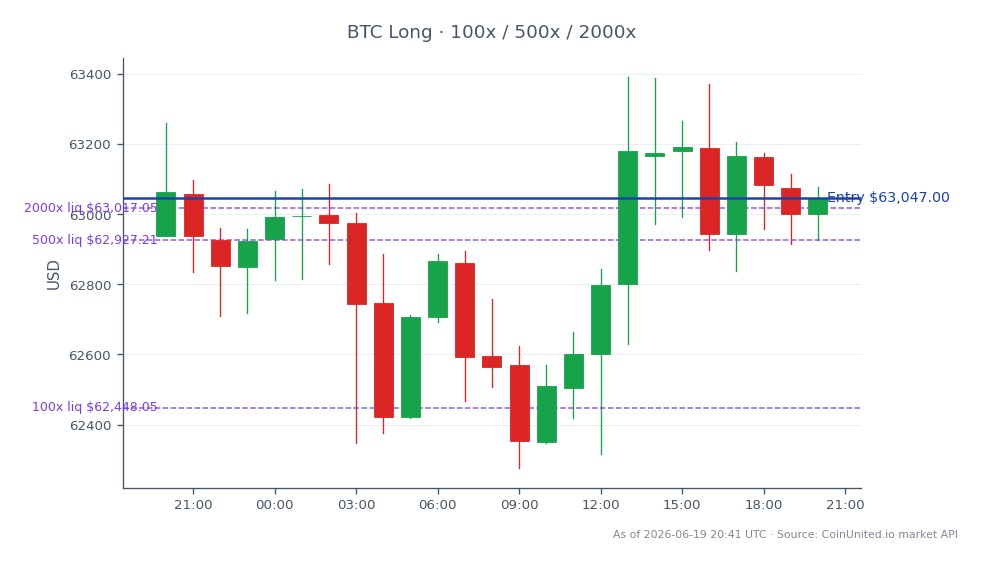
- •At $63,008, BTC leveraged longs face liquidation ~1% lower at 100x — the filing is a long-horizon catalyst, not a near-term price driver; avoid over-sizing leverage on narrative alone.
- •Crypto-proxy equities (MSTR, COIN, RIOT, MARA) and the NASDAQ-100 see indirect sentiment support as a new institutional BTC demand channel is formalized.
- •If approved as filed, this sets a regulatory precedent for hybrid equity+BTC wrappers, potentially triggering competing products from BlackRock, Fidelity, and others — watch for follow-on filings.
Franklin Templeton has filed with the SEC for two new hybrid ETFs — the Franklin US Equity Bitcoin DRIP Index ETF and the Franklin US Innovation Bitcoin DRIP Index ETF — that route US equity dividends
Event Summary
Franklin Templeton has filed with the SEC for two new hybrid ETFs — the Franklin US Equity Bitcoin DRIP Index ETF and the Franklin US Innovation Bitcoin DRIP Index ETF — that route US equity dividends into Bitcoin exposure, according to reporting by Yellow.com. Each fund starts at a 95%/5% equity-to-BTC split, with BTC capped at 20% between quarterly rebalances and trimmed back toward 4.5% when it exceeds 5%. Bitcoin exposure is implemented via ETPs, futures, options, or depositary receipts — including Franklin's own EZBC. The filing suggests an earliest possible launch date of September 1, 2026, roughly 75 days after submission, pending SEC effectiveness.
This is not a spot Bitcoin ETF story. It is a new hybrid wrapper that converts the recurring dividend cashflows of US large-cap equities into a systematic, programmatic bid for BTC-linked instruments — part of the broader ETF filing wave in AI stocks and crypto products reshaping institutional access.
Leverage Impact Analysis
Bitcoin is trading at $63,008 (24h range: $62,275–$63,404) — a compressed, low-volatility environment where leverage costs mount quickly without directional follow-through.
Worked example — leveraged long: A trader opening a 100x BTC perpetual long at $63,008 on CoinUnited.io faces liquidation approximately 1% lower (~$62,378 depending on margin tier). The Franklin filing is a structural, not immediate, catalyst — AUM flows won't materialize until September 2026 at earliest. This means leveraged longs cannot use this filing as a near-term price catalyst to hold through current resistance.
Quarterly rebalance dynamic: Once live, the funds' quarterly BTC trim mechanic (cutting from >5% back toward 4.5%) creates predictable selling pressure around rebalance dates when BTC outperforms. Conversely, if BTC underperforms equities and its weight drifts below the target, rebalance buying could provide a systematic floor bid. Traders should monitor crypto funding rates and positioning heading into future quarterly windows post-launch.
Funding rate context: With BTC near $63K and recent ETF outflow pressure noted in prior sessions, check live funding rates on CoinUnited.io before sizing leveraged longs — elevated positive funding increases the cost of holding longs in a sideways tape.
Cross-Market Impact
Bitcoin & BTC ETPs: Programmatic dividend-to-BTC flows would add a new structural demand channel alongside bitcoin municipal and institutional adoption trends already in motion. The magnitude depends on AUM scale and the average dividend yield of the underlying large-cap portfolio.
Crypto-proxy equities: Riot Platforms and Marathon Digital Holdings benefit from sentiment when new institutional BTC demand channels open, though the direct flow impact is indirect. Coinbase Global could see incremental custody/execution revenue if named as a counterparty in the BTC sleeve.
MSTR: The MSTR Bitcoin Premium / NAV gap dynamic could tighten marginally if Franklin's hybrid structure draws allocators who previously used MSTR as their only equity+BTC vehicle.
Indices: The Innovation ETF's growth/tech tilt means flows partially overlap with the NASDAQ-100 and S&P 500 constituent universes, creating mild incremental demand for large-cap US equities at scale.
Macro: Limited direct macro spillover. This is capital-markets plumbing, not a real-economy event. It does reinforce Bitcoin's deepening integration into mainstream multi-asset portfolios — consistent with the corporate crypto treasury and exchange listings theme.
Trading Considerations
BTC at $63,008 sits near the midpoint of its recent range ($62,275–$63,404). The Franklin filing is a September 2026 story — it provides a long-horizon structural bullish narrative but offers no near-term price catalyst to justify aggressive leveraged long exposure today, especially with July Fed hike odds elevated and ETF outflows lingering. Key level to watch on the downside: $62,000, where cascading liquidations for over-leveraged longs become a risk per recent session dynamics. Upside confirmation requires a reclaim of $63,400+ on volume.
Trade Bitcoin on CoinUnited.io
Trade BTC with up to 2000xx leverage → | Create Free Account
अक्सर पूछे जाने वाले प्रश्न
Not directly — the funds cannot launch before September 1, 2026, meaning no dividend flows enter BTC-linked instruments for months. This is a structural long-horizon bullish signal, not a near-term price catalyst; manage leverage accordingly at current $63K levels.
जारी रखें अन्वेषण
अस्वीकरण: यह संक्षेप केवल शैक्षिक उद्देश्यों के लिए है और यह निवेश सलाह नहीं है।