Quick Links
CIR S.p.A. H1 2026: Full KOS Acquisition Drives 28% Profit Jump, Buyback at €0.68 Signals Confidence
Data Snapshot
Key Takeaways
- •CIR H1 2026 net profit rose ~28% to €18.6m, driven by full consolidation of KOS S.p.A. following the €220m acquisition of F2i Healthcare's 40.23% stake completed January 2026.
- •KOS generated €816.1m revenues and €177.9m EBITDA in 2025, giving CIR a structurally defensive, cash-generative healthcare earnings base.
- •The partial tender offer at €0.68/share (up to 50m shares, €34m total) creates a defined price anchor and near-term demand catalyst for CIR equity.
- •An anti-embarrassment clause grants F2i 40.23% of gains on any future extraordinary KOS transaction, hinting management may contemplate a KOS IPO or stake sale — a longer-term re-rating trigger.
- •CIR's net financial position turned negative post-acquisition; higher leverage increases sensitivity to ECB rate trajectory and eurozone credit conditions.
CIR S.p.A. (Compagnie Industriali Riunite) has released its H1 2026 financial report showing consolidated net profit of €18.6m, up approximately 28% from €14.5m in H1 2025, according to MarketScreener
Event Analysis
CIR S.p.A. (Compagnie Industriali Riunite) has released its H1 2026 financial report showing consolidated net profit of €18.6m, up approximately 28% from €14.5m in H1 2025, according to MarketScreener. The earnings uplift is directly attributable to the full consolidation of KOS S.p.A. — Italy's leading long-term care provider — after CIR acquired the remaining 40.23% stake from F2i Healthcare for €220m cash on 29 January 2026, becoming its sole owner. Simultaneously, CIR launched a voluntary partial tender offer to buy back up to 50 million shares at €0.68 per share, representing up to €34m in capital returned to shareholders.
What makes this more than a standard earnings beat is the structural transformation underway. By concentrating ownership of KOS — a business generating €816.1m in 2025 revenues and €177.9m EBITDA — CIR is pivoting from a diversified conglomerate toward a healthcare-centric holding company. This matters for valuation: conglomerates typically trade at a discount to their sum-of-parts, while pure-play healthcare services operators command more predictable multiples underpinned by demographic ageing and recurring public/private funding. As reported by Investing.com, when the F2i stake acquisition was first announced, CIR shares surged over 8% — a direct signal of how sensitive the market is to KOS consolidation news.
One nuance worth tracking is the anti-embarrassment clause embedded in the F2i deal: F2i retains the right to 40.23% of gains on any extraordinary future KOS transaction (IPO, stake sale, spin-off), as confirmed by CIR's own press release. This is a standard PE exit mechanism, but its inclusion signals that management is at minimum contemplating further value-crystallising events for KOS down the line — a potential re-rating catalyst for patient holders. The corporate acquisitions and stock trading guide covers how these staged buyout structures typically unlock holding company discounts over time.
The trade-off is balance sheet leverage: CIR's net financial position has turned negative post-acquisition, increasing sensitivity to eurozone credit conditions. Equity investors need to weigh the earnings uplift from full KOS consolidation against the higher leverage profile. This dynamic is typical of private equity-style buyouts where near-term earnings accretion competes with financing risk.
What This Means for Traders
The most actionable angle here is CIR equity itself. The +28% profit growth and buyback price of €0.68 create a dual catalyst: earnings re-rating potential as healthcare multiples replace conglomerate-discount pricing, and a technical price floor near the tender offer level as arbitrageurs seek to tender shares. For event-driven traders familiar with acquisition arbitrage, the buyback window represents a defined event with elevated volumes and reduced downside near the tender price.
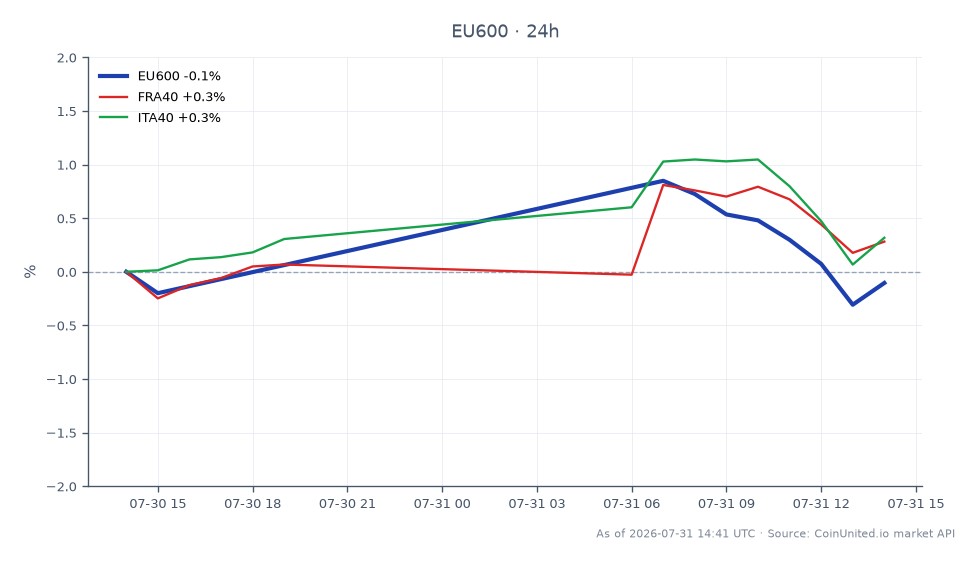
Broader sector read-across is moderate but real. European long-term care and healthcare services operators benefit from the positive signal of a strategic buyer deploying €220m into the space at a time when demographics structurally favour elder-care demand. The FTSE MIB Index has direct exposure to Italian listed names and may see marginal positive sentiment from a domestically significant healthcare deal. Wider European benchmarks like the STOXX Europe 600 Index and CAC 40 Index face negligible direct impact, though healthcare sub-indices within them benefit from the positive valuation signal. Sentiment is selectively bullish — this is a single-name and sector story, not a macro mover.
Start Trading on CoinUnited.io
Create Your Free Account → — Trade crypto, stocks, forex, indices, and commodities with up to 2000x leverage and zero fees.
Frequently Asked Questions
The gain reflects full consolidation of KOS S.p.A. after CIR acquired the remaining 40.23% stake in January 2026, adding all of KOS's revenues, EBITDA, and net income to the group's consolidated accounts.
Continue Exploring
Disclaimer: This brief is for educational purposes only and is not investment advice.