Quick Links
IndusInd Bank Q1 FY27: 72% Profit Surge Masks Key One-Off — What Traders Need to Know
Data Snapshot
Key Takeaways
- •Consolidated net profit rose 72% YoY to ₹1,037 crore, but a one-time ₹868.24 crore IFR transfer inflates the headline — normalized standalone profit of ~₹1,002 crore represents ~47% growth.
- •Provisions fell to ₹1,340 crore from ₹1,738 crore YoY, and GNPA/slippage trends improved — the durable, re-rating signal for sustained bank valuation uplift.
- •Board approved raising up to ₹30,000 crore (₹20,000 crore debt + ₹10,000 crore equity/convertible), signaling growth ambition but introducing dilution risk as a medium-term overhang.
- •Sector-wide Indian banking asset quality is improving (Indian Bank also posted 47%+ PAT growth with GNPA at 1.86%), supporting a constructive view on Nifty financials and banking indices.
- •The IFR transfer is non-recurring — traders should build valuation models on normalized EPS, NIM trajectory, and credit cost trends rather than headline profit growth.
IndusInd Bank Limited delivered a headline-grabbing Q1 FY27 earnings result, with consolidated net profit surging 72% year-on-year to ₹1,037 crore, according to Business Standard. However, the figure
Event Analysis
IndusInd Bank Limited delivered a headline-grabbing Q1 FY27 earnings result, with consolidated net profit surging 72% year-on-year to ₹1,037 crore, according to Business Standard. However, the figure requires careful dissection: a one-time ₹868.24 crore transfer from the Investment Fluctuation Reserve (IFR), mandated by RBI directives, materially inflated the headline number. Stripping out this non-recurring item, standalone net profit came in at approximately ₹1,002–1,003 crore — still a robust 46–47% YoY gain, as reported by Moneycontrol. This beat consensus analyst estimates of roughly ₹725 crore by a wide margin.
The more durable signal lies in asset quality improvement. Provisions for potential bad loans fell sharply to ₹1,340 crore from ₹1,738 crore a year earlier, while gross NPA ratios and slippages trended lower. These are the metrics that drive sustainable bank re-ratings — lower credit costs structurally improve return on equity and justify higher valuation multiples. As Quartr noted, Q1 FY27 marked a genuine "return to balance sheet growth, improved profitability, and strengthened asset quality" for the lender.
The second major development is the board's approval to raise up to ₹30,000 crore in fresh capital — ₹20,000 crore via debt securities and up to ₹10,000 crore through equity or convertible instruments. This signals an aggressive growth posture in retail and MSME lending, but also introduces meaningful dilution risk. Large equity-raise announcements frequently create a "buy the beat, fade the overhang" dynamic in bank stocks. Sophisticated investors will watch the pricing and structure of this raise closely. For context on how equity offerings shape market dynamics, timing and structure matter as much as the headline size.
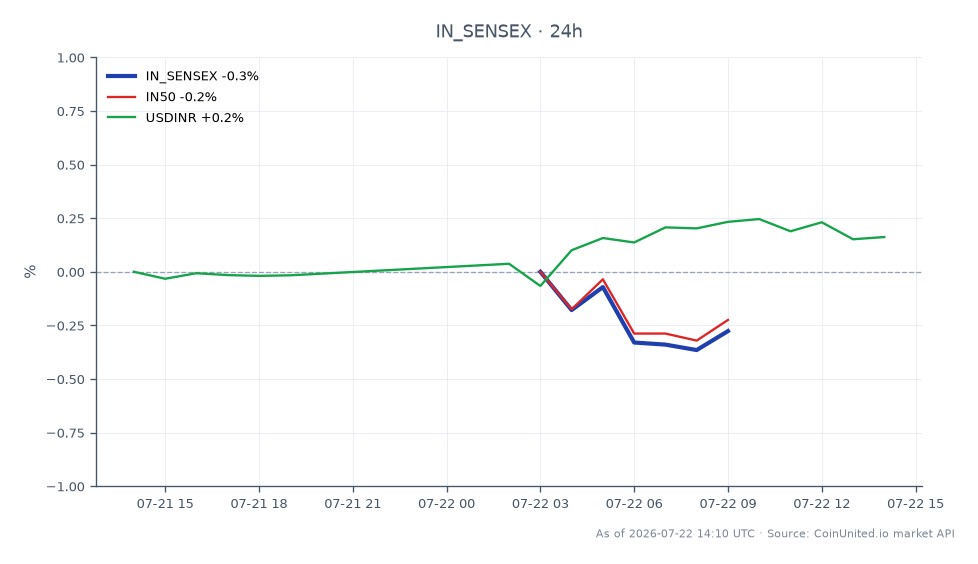
IndusInd's result fits within a broader pattern of strong Q1 FY27 numbers across Indian banking. Indian Bank posted a PAT rise of 47.46% with GNPA falling from 3.01% to 1.86% in the same period. The consistent sector-wide improvement signals benign credit conditions in India's financial system — a positive read-through for the India NIFTY 50 Index and India S&P BSE SENSEX financials weightings.
What This Means for Traders
The near-term price action on IndusInd Bank equity is likely bullish, driven by the earnings beat versus consensus and the asset-quality narrative. However, traders should distinguish between the 72% headline and the ~47% normalized figure — markets re-rate on sustainable earnings, and sophisticated participants will strip out the IFR transfer. A "sell-the-news" or range-bound pattern in the medium term is plausible once the capital-raise dilution risk is fully priced in. This is a classic setup covered in how to trade earnings beats: the initial gap higher often fades when overhang becomes apparent.
For broader index traders, improved Indian bank asset quality is incrementally constructive for financials-heavy indices. The US Dollar / Indian Rupee pair is unlikely to move materially on this single result, but a sustained pattern of strong Indian bank earnings supports the bullish India macro narrative, which can gradually weigh on USD/INR. Monitor whether the capital raise is equity-heavy — that would be the clearest trigger for medium-term stock resistance.
Start Trading on CoinUnited.io
Create Your Free Account → — Trade crypto, stocks, forex, indices, and commodities with up to 2000x leverage and zero fees.
Frequently Asked Questions
No — the one-time ₹868.24 crore IFR transfer is non-recurring and materially boosted the consolidated figure. The underlying 47% standalone growth is more representative of core earnings momentum, though still strong.
Continue Exploring
Disclaimer: This brief is for educational purposes only and is not investment advice.