Quick Links
USD Slides as US-Iran Deal Talk Triggers Risk-On Rotation — Leverage Implications Across FX, Oil & Indices
Data Snapshot
Key Takeaways
- •Leveraged USD-long positions (EURUSD shorts, DXY longs) face acute reversal risk — unconfirmed deal headlines can whipsaw 50-100+ pips within minutes; tight stops are essential at high leverage.
- •WTI and Brent dropped ~4% on Hormuz risk-premium unwind — short oil CFDs are in profit but face violent snapback if Iran denies the agreement.
- •Cross-market: Nasdaq +2.54%, S&P +1.75% on risk-on rotation; growth equities and high-beta FX (AUD, NZD, NOK) are the structural beneficiaries of a durable deal.
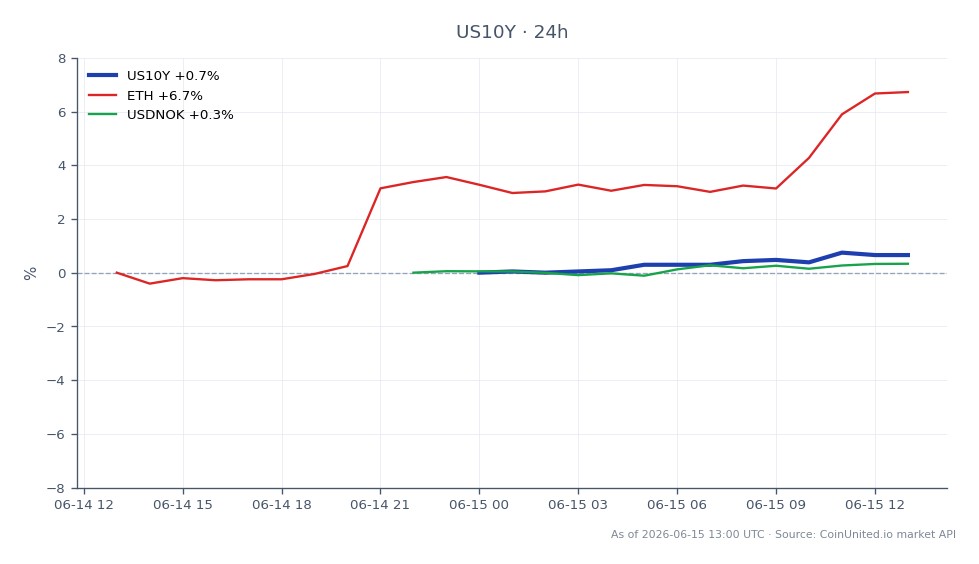
- •US 10Y yield at 4.45% (-0.71%) reflects lower energy-inflation expectations — a confirmed deal could push yields toward 4.30%, supporting duration and compressing the Fed's 'higher for longer' narrative.
- •Headline risk is extreme — Iranian pushback or deal denial reverses USD, oil, and equities simultaneously; monitor official statements before scaling up leveraged exposure.
According to Convera FX Research and Reuters, the US dollar weakened to start the week as reports of a US-Iran ceasefire or "great settlement" framework circulated, lifting global risk appetite. Reute
Event Summary
According to Convera FX Research and Reuters, the US dollar weakened to start the week as reports of a US-Iran ceasefire or "great settlement" framework circulated, lifting global risk appetite. Reuters noted the dollar was heading for a weekly loss "after reports" of a deal — meaning markets are trading expectations, not a signed agreement. Iranian officials have partially pushed back on the finality of any accord, making this a headline-driven, binary-risk event rather than a confirmed policy shift. The Iran De-escalation Energy Trade Pivot theme is now the dominant macro driver across FX, oil, and indices.
According to the same Convera research note, WTI crude fell approximately 4% and Brent approximately 4.2% intraday on reduced Strait of Hormuz risk premium, while equities posted their best session in months — Nasdaq +2.54%, S&P 500 +1.75%, Dow +1.86%. The US 10-Year Treasury yield is currently at $4.45, down 0.71% on the day, reflecting both lower oil-driven inflation expectations and a partial flight into duration.
Leverage Impact Analysis
This event creates sharp, asymmetric moves ideal — and dangerous — for leveraged positions.
Forex (USD pairs): The DXY is under pressure across the board. A trader holding a 100x long EURUSD CFD entered at 1.0850 faces ~1% adverse move risk per 100 pip swing — at 100x, that equals the entire notional. With conflicting Iran headlines capable of reversing the USD move in minutes, position sizing discipline is critical. Tighter stops (15-25 pips) are warranted versus normal ranges.
Oil CFDs: WTI is down ~4% on de-escalation. A 50x long WTI CFD opened at $75.00 before the news would now face a ~$3 adverse move — equivalent to 200% of a 1% margin. Conversely, short WTI traders at high leverage are in profit but face violent snapback risk if Iran denies the deal. The Hormuz Strait Energy Supply Shock remains a live tail risk.
Indices: Long US100 CFDs benefit from the risk-on surge. A 50x long US100 position gains approximately 1.27% per 1% index move — the 2.54% Nasdaq rally represents over 127% return at that leverage level, but the same move in reverse would trigger margin calls rapidly. Monitor VIX levels; a spike back above 20 would signal deal-credibility erosion.
Cross-Market Impact
The FOMC Inflation Policy Crossroads is directly affected: lower oil compresses breakeven inflation, reducing pressure on the Fed to hold rates higher for longer. The US10Y at 4.45% (down 0.71%) reflects this repricing. A durable deal could push yields toward 4.30% as energy inflation risk fades — bullish for growth equities and negative for the dollar.
Petro-currencies USDCAD and USDNOK face downside in CAD and NOK versus USD as oil weakens. Meanwhile, Gold faces a mixed signal: weaker USD is bullish, but lower inflation expectations and improved risk sentiment reduce safe-haven demand — net effect likely range-bound near term. For a deeper look at this dynamic, see the Gold vs. US Dollar trader's guide.
BTC and ETH historically benefit from weaker USD and improved risk sentiment. If the deal narrative holds, crypto acts as a high-beta risk-on asset in this environment. Energy stocks (XOM, CVX, ConocoPhillips) face near-term headwinds from lower crude prices.
Trading Considerations
Key levels to watch: DXY support around 99.50 (break lower confirms extended USD weakness); WTI $70 as next major support if Hormuz risk premium fully unwinds; US10Y at 4.42% (today's low) as near-term yield floor. The critical risk is Iranian denial or deal collapse — which would reverse all of the above within hours. Traders should monitor official statements from Tehran and Washington for implementation language. The Fed Macro Policy Crossroads adds a second layer: any Fed speaker commentary on how lower oil changes their inflation calculus could amplify USD moves in either direction.
Trade United States 10 Year Yield on CoinUnited.io
Trade US10Y with up to 2000xx leverage → | Create Free Account
Frequently Asked Questions
A 100x short DXY / long EURUSD CFD gains approximately 1% per 100 pip USD decline — but Iranian denial headlines can reverse 80-100 pips in minutes, wiping gains or triggering liquidation. Use strict stop-losses and avoid oversizing until the deal is officially confirmed.
Continue Exploring
Disclaimer: This brief is for educational purposes only and is not investment advice.